
Diocletian's Ladder
Why Adding More Almost Always Sinks Us — From Roman Bureaucracy to Software Collapse, and the Ancient Brain Shortcut That Points a Way Out
Rung by rung we climb—
the ladder eats what we shed.
Down is also brave.
With every article and podcast episode, we provide comprehensive study materials: References, Executive Summary, Briefing Document, Quiz, Essay Questions, Glossary, Timeline, Cast, FAQ, Table of Contents, Index, Polls, 3k Image, Fact Check, Comic and
Street Art at the very bottom of the page.
Soundbite
Trailer
Essay
Let’s start with a corpse nobody likes to look at directly: the Western Roman Empire, third century AD, bleeding out on multiple fronts at once. Invasions on every border. Currency worth less each year. Emperors dying faster than they could be crowned. And into that wreckage walks Diocletian, a man who did something almost admirable — he looked at the chaos and responded with logic. He doubled the army. He built out the bureaucracy. He subdivided the provinces into neat, governable units. He did, in other words, exactly what any competent manager would do when a system is failing: he added more structure to hold it together.
It worked. For a while. And then it became the very thing that finished Rome off.
This is the quietly devastating insight at the center of anthropologist Joseph Tainter’s 1988 book The Collapse of Complex Societies, and it’s the spine of this episode. Tainter noticed something the “barbarians at the gates” version of history conveniently skips: Rome had survived worse invasions before. The Maya endured droughts for centuries before the one that broke them. So the shock wasn’t the killer. The vulnerability was. And the vulnerability, Tainter argues, was complexity itself — not evil, not stupid, just complexity that had quietly stopped paying for itself.
Here’s the mechanism, and it’s almost embarrassingly simple once you see it. Every society is a problem-solving machine. It hits a problem — a food shortage, a security threat, a labor dispute — and it solves that problem by adding a layer: an irrigation system, a standing army, a regulatory office. Early on, these investments pay off wildly. A village well costs almost nothing and saves everyone from dysentery. Basic literacy costs a modest school and unlocks contracts, ledgers, laws people can actually read. This is the low-hanging fruit, and for a long time, it’s genuinely glorious. But eventually you’ve dug the easy wells and taught the easy alphabet, and the next problem requires something far more expensive to solve, for far less benefit. Diocletian didn’t get to invade wealthy new territory and use the loot to pay for his bigger army, the way earlier Rome had. He had to squeeze it out of his own farmers, which meant crushing taxation, which meant a debased currency, which meant hyperinflation, which meant those same farmers fleeing their land and volunteering into feudal servitude just to survive the tax collector. That’s not an accident of bad leadership. That’s the math of diminishing returns, working exactly as Tainter’s equation predicts it will, on any system, in any century.
And this is where the episode does something I genuinely didn’t expect going in: it opens with brain scans. Specifically, a 2019 eLife study out of the Human Connectome Project, using tractography on over 600 people’s brains to map a shortcut — a subcortical pathway that runs straight from the retina to the amygdala, skipping the entire elaborate, high-resolution visual cortex. When something in the grass moves and might be a snake, your brain doesn’t convene a committee. It doesn’t want the crisp, color-corrected image. It wants speed, and it evolved, over millions of years, to strip away everything non-essential to get it. Complexity, in other words, is a luxury species reserve for when they’re safe. Under real threat, nature’s answer is always subtraction.
Which makes it almost funny, in the way only tragedy can be funny, that human institutions do the exact opposite. We hit a crisis and reach for a new department. A mathematical model published in MDPI, built to abstract Tainter’s theory into laborers and administrators, found something the researchers called the ratchet effect: once someone gets promoted into an administrative role to solve a problem, they essentially never get demoted back into productive labor, even after the problem is gone. The ratchet only turns one way. And it’s not because people are lazy or corrupt — it’s because, as sociologist C. Northcote Parkinson noticed decades ago, an efficient manager who eliminates their own department gets punished for it. Their budget shrinks. Their staff disappears. Their job looks expendable. So the rational move, individually, is to generate more work, more oversight, more forms — which is collectively how you get an entire civilization one bureaucratic Jenga tower away from collapse.
The episode doesn’t stop at ancient Rome. It walks this same logic straight into the present: declining patents per inventor, the eye-watering cost of modern drug discovery known as Eroom’s Law (Moore’s Law, spelled backward, and behaving backward too), decades-old COBOL banking systems nobody dares touch, entire airline networks grounded because a crew-scheduling database built in the ‘90s finally buckled. Different centuries, identical shape. The marginal return on the next fix keeps shrinking, and the cost of not fixing it keeps compounding, like a leaky pipe wrapped in duct tape and then scaffolding and then a whole humming room of pumps and sensors, just to avoid the honest work of replacing the pipe.
Here’s the part worth sitting with, though, because it’s where this stops being a eulogy and starts being useful. Tainter’s framework isn’t actually fatalistic. There’s a way out that doesn’t require Hollywood’s version of collapse — the roving gangs, the Mad Max wasteland. When the Western Roman Empire crumbled in the fifth century, the Byzantines, facing the identical crushing costs, chose something almost nobody chooses voluntarily: they climbed down a few rungs on purpose. They abandoned expensive standing armies for local defense militias. They shed the vanity projects. They accepted a lower, leaner level of sophistication in exchange for staying alive — and it worked so well that the Eastern Empire outlasted Rome by a thousand years.
That’s the reframe this episode offers, gently but firmly: collapse doesn’t have to mean the end of something. Sometimes it just means the end of a structure that stopped earning its keep, and the beginning of something lighter, more resilient, more honest about what it can actually afford. Your own brain already knows this move. It has known it for millions of years. When it truly matters, it doesn’t add a layer — it finds the shortcut, drops the noise, and moves. Maybe the bravest, least catastrophic thing any of us — or any institution — can do is the same: look honestly at which rungs of the ladder are rotting beneath us, and step down a few, on our own terms, before they choose the moment for us.


Link References
Excerpts from the Collapse of Complex Societies - Schumacher Center for a New Economics
Claude Fable 5 and Claude Mythos 5 - Anthropic
Silicon Age Collapse: Systemic risks to digital civilization - Machine
Computing, Complexity and Degrowth : Systemic Considerations for Digital De-escalation - arXiv
Peak Complexity and Unsustainable Debt - History News Network
Episode Links
Apple Podcast
Spotify
Available for broadcast on PRX
PRX Series
Other Links to Heliox Podcast
YouTube
Substack
PRX ( Public Radio Exchange)
Podcast Providers
Spotify
Apple Podcasts
Patreon
FaceBook Group
STUDY MATERIALS
The Pulse and the Pulvinar:
Short-Circuiting Our Way Through the Complexity Trap
I. The Cold Open: A Symphony of Collapse and Conservation
While civilizations are drowning in their own sophistication, there is a three-pound organ in your head that solved this problem millions of years ago.
Evolution is the ultimate small-government minimalist. It built a “High Road”—your visual cortex—to do the heavy data-crunching. It’s beautiful, high-res, and... agonizingly slow.
So, the brain kept a “Low Road.” A back-alley deal. A neural shortcut that doesn’t wait for the committees to vote. It just sees a threat and acts.
Today, we’re asking: If our brains have perfected the “Low Road” to keep us alive, can we build one for our crumbling 21st-century systems? Or are we just adding more weight to the door?
II. The Discovery: Finding the Brain’s Secret Shortcut
For decades, the existence of a subcortical “Low Road” for vision was the most heated bar-fight in neuroscience. We knew it existed in rodents—a direct line for auditory threats—but many argued that the human brain was too “top-heavy,” too reliant on the cortex to have a primitive bypass.
The 2019 eLife study by Jessica McFadyen and her team at the University of Queensland broke the stalemate. They utilized the Human Connectome Project (HCP) dataset—a massive, high-resolution map of 622 participants—to hunt for a ghost in the machine. They weren’t looking for a “feeling”; they were looking for a “generative signal model”—a Bayesian approach to global tractography that reconstructs the entire brain’s configuration to see if these specific fibers actually made sense.
Instead of just tracking lines, they used SIFT2 (Spherical-Deconvolution Informed Filtering of Tractograms). Think of it as weighing the cables: it filters the data so the results reflect the actual biological density of the fibers, not just the noise of the scanner.
The Three Pillars of Proof
Structural Reconstruction: Using both global and local tractography to map the white matter “cables” connecting the Superior Colliculus (SC), the Pulvinar (PUL), and the Amygdala (AMG).
Functional Modeling (DCM): Through Dynamic Causal Modeling, they watched the blood flow. They didn’t just see the roads; they saw the traffic moving toward the amygdala when participants viewed fearful faces.
Behavioral Correlation: They proved that people with denser “cables” in this pathway were measurably faster and better at recognizing fear in others.
This is the “Dual Route” model: the brain maintains a high-energy “thinking” path and a low-energy “reacting” path. But as we’ll see, having a shortcut is only half the battle; the other half is the energy tax.
III. The Tainter Tipping Point: When Complexity Becomes a Tax
Joseph Tainter’s theory of “The Collapse of Complex Societies” isn’t about running out of resources; it’s about the cost of problem-solving. When a society faces a threat, it creates a new layer of complexity. But each layer requires “metabolic” energy to maintain. Eventually, you’re spending 90% of your energy just keeping the lights on in the bureaucracy.
The human visual cortex is the brain’s “Federal Agency for Sight.” It is a massive, energy-hungry department that provides high-definition analysis. But in Tainter’s terms, the cortex eventually hits diminishing marginal returns. If you have a snake at your feet, you don’t need a 50-page report on its scales; you need a “Low Road.”
The Pulvinar is the brain’s way of avoiding the energy tax. It acts as a subcortical “minimalist state.” It doesn’t do “high-res,” but it is incredibly metabolically cheap. By bypassing the cortical bureaucracy, it delivers a “good enough” signal to the Basolateral Amygdala (BLA)—the gatekeeper of threat—allowing the organism to survive without filing a single form with the Primary Visual Cortex.
The tragedy of the “Complexity Trap” is that societies often lose their pulvinars. They become all “High Road,” requiring massive energy to solve simple problems, until a sudden shock causes the whole fragile, top-heavy system to snap.
IV. The Silicon Shortcut: AI as the New Pulvinar?
In the 21st century, we are drowning in data-saturated complexity. To survive, we are attempting to build a technological “afferent white matter pathway”—Artificial Intelligence. Models like Google’s Co-Scientist or Anthropic’s patterns-recognition engines are being framed as our new “Technological Low Road.”
However, we face a stark paradox. The biological pulvinar is a masterpiece of energy efficiency. Our technological pulvinar—the Large Language Model—is the opposite. We are building “shortcuts” that require the energy output of small nations to function. We are fighting complexity with a system that is, itself, a new peak of complexity.
An Afferent Subcortical Pathway for Fear Recognition: Neural Structure and Function
Executive Summary
This briefing document details the findings of a large-scale multimodal neuroimaging study regarding the existence and functional role of a subcortical visual pathway to the amygdala in humans. Utilizing data from 622 participants in the Human Connectome Project (HCP), the study provides convergent evidence for a white matter pathway originating in the superior colliculus and traveling through the pulvinar to the amygdala.
Critical takeaways include:
Structural Validation: Sophisticated tractography successfully reconstructed a subcortical route, identifying the inferior pulvinar as a primary connecting node to the basolateral amygdala.
Functional Recruitment: Computational modeling confirms that a “Dual” pathway—consisting of both cortical and subcortical routes—best explains neural activity during emotional face processing.
Behavioral Correlation: Higher fibre density in the pulvinar-amygdala connection specifically predicts an individual’s ability to recognize fearful expressions.
Intermodal Integration: The study demonstrates a direct correlation between structural integrity (fibre density) and functional strength (effective connectivity), particularly in the right hemisphere.
1. Structural Architecture of the Subcortical Route
The study identifies a physical white matter structure connecting the superior colliculus (SC), pulvinar (PUL), and amygdala (AMG). This “shortcut” has long been hypothesized in humans but remained elusive due to the depth and speed of the structures involved.
Tractography Methods
The researchers used two complementary methods to cross-validate the existence of the pathway:
Global Tractography: A Bayesian approach that reconstructs whole-brain fibre configurations. It reliably detected connections in 98.7% of the sample.
Local Probabilistic Tractography: A method focused on specific regions of interest (ROIs), further refined by SIFT2 (Spherical-Deconvolution Informed Filtering of Tractograms) to provide a biologically accurate estimate of apparent fibre density.
Anatomical Mapping and Subregions
The analysis revealed specific termination points within the subcortical nodes:
SC to PUL: Fibres terminate predominantly in the inferior and anterior pulvinar.
PUL to AMG: Fibres from the inferior pulvinar connect primarily to the basolateral amygdala (known for processing visual information about threat).
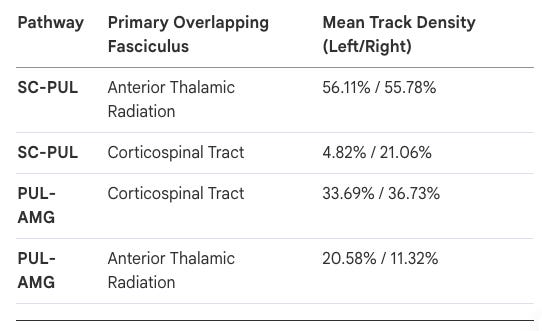
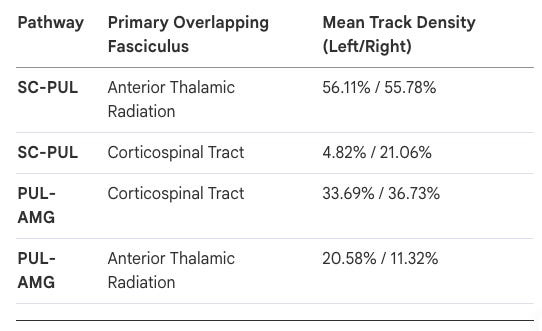
Pathway Overlap: The subcortical route overlaps significantly with major fasciculi, as detailed in the table below:
2. Functional Dynamics and Effective Connectivity
Beyond identifying the physical structure, the study modeled how information flows through these regions during active tasks.
Functional fMRI Activation
Participants performed a matching task involving faces (angry or fearful) versus shapes. Whole-brain analysis showed significant BOLD (blood-oxygen-level-dependent) signal activation in:
The amygdala, fusiform gyrus (FG), and inferior occipital gyrus (IOG).
Specific subcortical nodes: the superior colliculus (65–73% of voxels) and pulvinar (36–51% of voxels).
Dynamic Causal Modeling (DCM)
To determine the direction of information flow, the researchers tested 102 different models of connectivity.
The Winning Model: A “Dual” model with inputs to both the SC and PUL. This model includes a forward-only subcortical route (SC → PUL → AMG) operating alongside reciprocal cortical pathways (IOG ↔ FG and FG ↔ AMG).
Exceedance Probability: The “Dual with SC and PUL input” family of models achieved a 100% exceedance probability, indicating it is the most likely explanation for the observed neural activity.
3. Behavioral Significance: Fear Recognition
A key finding is the relationship between the subcortical pathway’s physical properties and behavioral performance in recognizing emotions.
The Penn Emotion Recognition Task
Participants were tested on their ability to identify happy, sad, angry, fearful, or neutral faces. While accuracy was highest for happy faces, the study focused on the recognition of negative emotions to assess threat perception.
Findings on Fibre Density
Multivariate regression analysis revealed that:
Specific to Fear: Fibre density in the pulvinar-amygdala connection predicted recognition accuracy specifically for fearful faces.
Exclusion of Other Emotions: This relationship did not extend significantly to angry or sad faces, suggesting the subcortical route is specialized for fear-related signals rather than general negative affect or threat.
Hemispheric Role: This effect was driven by both left and right pulvinar-amygdala connections.
4. Integration of Structure and Function
The study successfully harmonized structural and functional data, showing that the physical “hardware” of the brain limits or enables its “software” (dynamic processing).
Correlation Between Fibre Density and Coupling
Participants with greater fibre density in the right pulvinar-amygdala pathway exhibited stronger modulatory activity (effective connectivity) during face processing.
Right-Side Lateralization: This correlation was significant on the right side (r = 0.180, p = 0.004) but not on the left.
Implications: This supports the theory of right-hemisphere specialization for the non-conscious processing of emotional signals.
5. Scientific and Clinical Implications
The findings settle a long-standing debate regarding the “low road” to the amygdala and offer insights into neurological and psychiatric conditions.
Resolution of the “Low Road” Controversy
The evidence suggests that the subcortical route is not merely a relic of animal evolution but a functional, afferent pathway in humans that facilitates rapid fear recognition. It operates in parallel with the cortical visual stream, likely providing a redundancy that is critical for survival.
Clinical Relevance
The study notes that alterations in this subcortical pathway are associated with specific clinical profiles:
Autism: Previous research indicates weakened structural and functional connectivity in this route, potentially explaining reduced responsiveness to fearful faces.
Anxiety: High-anxiety individuals often show hyperactive activity along the subcortical route.
Cortical Blindness: The pathway explains “blindsight”—where patients with primary visual cortex lesions can still respond to emotional stimuli they cannot consciously see.
Conclusion
The research provides a comprehensive multimodal map of the subcortical route. By linking white matter fibre density to both the dynamic coupling of brain regions and the behavioral accuracy of fear recognition, it establishes the pulvinar-amygdala connection as a fundamental component of the human threat-detection system.
Quiz & Answer Key
Subcortical Pathways and Fear Recognition
This study guide reviews the research findings presented in “An afferent white matter pathway from the pulvinar to the amygdala facilitates fear recognition” (McFadyen et al., 2019). The research utilizes multimodal neuroimaging data from the Human Connectome Project (HCP) to investigate the structural and functional existence of a subcortical visual shortcut to the amygdala in the human brain.
Part I: Short-Answer Quiz
Instructions: Answer the following questions in two to three sentences based on the provided text.
What is the primary objective of the study conducted by McFadyen et al.?
Which three specific brain structures are identified as the “nodes” of the human subcortical visual route?
How does the study define the difference between “structural connectivity” and “effective connectivity”?
What specific behavioral advantage is associated with greater fibre density in the pulvinar-amygdala pathway?
What were the two tractography methods used to cross-validate the structural findings?
According to the Dynamic Causal Modeling (DCM) results, which “family” of models best explained the neural activity during face-viewing tasks?
What role does the inferior pulvinar play in the reconstructed subcortical pathway?
How does the research characterize the hemispheric lateralization of the subcortical route?
How do findings regarding cortically blind (blindsight) patients support the hypothesis of a subcortical route?
What are the suggested implications of this pathway for clinical populations such as individuals with autism or anxiety?
Part II: Answer Key
Primary Objective: The study aims to provide converging evidence for a subcortical white matter pathway from the superior colliculus to the amygdala via the pulvinar. It seeks to determine if this pathway exists anatomically in humans and whether it facilitates the rapid recognition of fearful expressions.
Three Nodes: The subcortical visual route consists of the superior colliculus (the initial subcortical visual receiver), the pulvinar (a thalamic nucleus serving as a relay), and the amygdala (the structure responsible for processing threat and emotion).
Connectivity Types: Structural connectivity refers to the physical anatomical white matter tracts (nerve fibres) connecting regions, measured here via diffusion-weighted imaging (DWI). Effective connectivity, or dynamic coupling, refers to the direction-specific flow of information and how one neural system exerts influence over another, modeled using fMRI data and Dynamic Causal Modeling.
Behavioral Advantage: Individuals with higher fibre density in the pulvinar-amygdala pathway demonstrate significantly better accuracy in recognizing fearful faces. This relationship was found to be specific to fear, rather than other negative or threatening emotions like sadness or anger.
Tractography Methods: The researchers used “global tractography,” a Bayesian approach that reconstructs whole-brain fibre configurations to explain diffusion data, and “local probabilistic tractography,” which uses a stepwise approach to generate streamlines between specific regions of interest.
Winning Model Family: The winning family was the “Dual with SC and PUL input” family, which includes both a cortical pathway and a subcortical route. This model suggests that information flows forward from the superior colliculus and pulvinar to the amygdala while operating alongside reciprocal cortical interactions.
Role of the Inferior Pulvinar: The inferior pulvinar serves as the critical connecting node or relay point between the superior colliculus and the basolateral amygdala. Analysis of terminations showed that fibres from the superior colliculus predominantly reach the inferior pulvinar, which in turn sends the vast majority of its amygdala-bound fibres from that same subregion.
Hemispheric Lateralization: The study observed a right-sided specialisation for the subcortical route, noting greater fibre density in the right pulvinar-amygdala connection compared to the left. Furthermore, the correlations between tractography, behavior, and effective connectivity were stronger in the right hemisphere.
Blindsight Support: Research on cortically blind patients shows they can still respond to emotional visual stimuli despite having a destroyed primary visual cortex, suggesting a “shortcut” exists. In these patients, the subcortical route often shows increased structural connectivity (fractional anisotropy), likely to compensate for the loss of cortical pathways.
Clinical Implications: The study suggests that the subcortical pathway may be a source of dysfunction in certain conditions; for instance, individuals with autism show weakened structural connectivity and reduced BOLD signals in these areas. Conversely, individuals with anxiety often exhibit hyperactive activity along this subcortical route when processing fearful stimuli.
Essay Questions
Instructions: Consider the following questions for deeper analysis. (Answers not provided).
Multimodal Integration: Discuss the importance of using a multimodal imaging approach (DWI, fMRI, and behavioral testing) rather than a unimodal approach when identifying controversial neural pathways.
The “Low Road” vs. “High Road”: Compare the functional roles of the subcortical “shortcut” and the traditional cortical visual stream. How might they interact to ensure survival?
Anatomical Constraints in Research: Analyze the limitations of diffusion tractography mentioned in the text, such as the difficulty of tracing fibres through the grey matter of the pulvinar. How did the researchers attempt to overcome these hurdles?
The Pulvinar as a Gatekeeper: Based on the study’s findings, evaluate the role of the pulvinar not just as a relay, but as a complex structure with distinct subregions that may integrate cortical and subcortical information.
Evolutionary Context: Given that this subcortical shortcut is well-documented in rodents, what does its confirmation in humans suggest about the evolution of the human visual system and threat detection?
Glossary of Key Terms
Afferent
Moving or conducting inward toward a central organ or section; in this context, a pathway conveying information toward the amygdala.
Amygdala (AMG)
A structure located deep within the brain’s temporal lobe that is highly responsive to signs of threat and regulates emotional responses.
BOLD Signal
Blood-Oxygen-Level-Dependent signal; a method used in fMRI to observe different areas of the brain which are found to be active at any given time.
Diffusion-Weighted Imaging (DWI)
An MRI technique that uses the diffusion of water molecules to generate contrast in MR images, allowing the mapping of the brain’s white matter tracts.
Dynamic Causal Modeling (DCM)
A framework for specifying, estimating, and comparing models of functional brain connectivity to determine how brain regions interact.
Effective Connectivity
The influence that one neural system exerts over another, representing the direction-specific flow of information.
Fibre Density
A quantitative measure of the proportion of space occupied by white matter fibres within a specific neural pathway.
Fusiform Gyrus (FG)
A cortical region involved in high-level visual processing, particularly the recognition of faces.
Human Connectome Project (HCP)
A large-scale project aimed at mapping the neural pathways that underlie human brain function using high-quality neuroimaging data.
Inferior Occipital Gyrus (IOG)
A part of the visual cortex involved in the early stages of face processing within the cortical stream.
Pulvinar (PUL)
The largest nucleus of the thalamus; it acts as a relay station and is involved in modulating attention and processing emotional stimuli.
Superior Colliculus (SC)
A structure in the midbrain that receives direct retinal input and is involved in orienting responses to visual stimuli.
Tractography
A 3D modeling technique used to visually represent nerve tracts using data collected by diffusion MRI.
Cast of Characters
A Structural and Functional Analysis of the Subcortical Fear Pathway
1. The Architects of Discovery: Research Leadership and Objectives
For decades, the neuroscientific community was deadlocked over the existence of a “neural shortcut”—a rapid, subcortical route for threat detection capable of bypassing the visual cortex. While documented in animal models, this “low road” remained a controversial ghost in human neuroanatomy. To shatter this stalemate, McFadyen, Mattingley, and Garrido executed a high-stakes investigation to dismantle the resistance against the “neural shortcut” theory. This was not merely a descriptive study; it was a strategic operation to synthesize structural, functional, and behavioral data into a singular, cohesive proof of a biologically conserved survival system in the human brain

Mission Statement To provide definitive multimodal evidence for an afferent subcortical pathway from the superior colliculus to the amygdala via the pulvinar, demonstrating that its structural integrity—specifically white matter fibre density—directly dictates fearful face recognition and functional dynamic coupling in humans.
This rigorous strategic foundation provided the necessary framework to manage the massive “Character Pool” provided by the Human Connectome Project, ensuring the results were scalable and representative of universal human neural architecture.
2. The Protagonists: The Subcortical “Fast Track” Nodes
The subcortical route functions as the brain’s “First Responder.” Biologically, these regions act as a streamlined surveillance system, optimized for detection speed over high-resolution detail. These characters prioritize evolutionary survival, identifying biological significance—threats—seconds before the conscious mind renders a complete image.
The Superior Colliculus (SC): The Sentinel
Anatomical Role: The visual entry point. It receives retinal afferents and initiates the threat-detection sequence.
Interaction Profile: The SC-PUL connection is the pathway’s high-density backbone (Global count: ~13.12). Intriguingly, local tractography reveals a left-sided dominance for this connection (t = 10.749), showing greater density on the left than the right.
Effective Connectivity: The winning model confirms significant modulatory coupling for the Left SC-PUL (Mean = 1.063) and Right SC-PUL (Mean = 1.059) in response to faces.
The Pulvinar (PUL): The Bridge
Anatomical Role: The Inferior and Anterior Pulvinar clusters serve as the critical relay. The Inferior Pulvinar, specifically, acts as the primary hub connecting the Sentinel to the Emotional Processor.
Interaction Profile: It receives forward-only input from the SC. In a specialized evolutionary “tug-of-war,” while the Sentinel inputs are left-dominant, the bridge to the Amygdala shows clear right-sided lateralization.
The Amygdala (AMG): The Fear Processor
Anatomical Role: The terminus of the “low road.” In the left hemisphere, the pathway terminates in the Basolateral Amygdala. Crucially, in the right hemisphere, local tractography reveals a specialized termination in the Centromedial Amygdala.
Interaction Profile: The PUL-AMG connection (Global count: ~6.04) is the most behaviorally significant link.
Effective Connectivity: This link displays the highest modulatory “volume” in the subcortical network, with the Left PUL-AMG showing a mean modulatory parameter of 1.834 (SD 1.0) and the Right PUL-AMG at 1.731 (SD 0.765).
While these subcortical protagonists provide the rapid response, they maintain a constant strategic dialogue with the “Supporting Cast” of the cortical visual stream.
3. The Supporting Cast: The Cortical Visual Stream
The “Dual-Route” hypothesis posits that the brain operates a strategic partnership. While the subcortical route offers speed, the cortical stream provides the high-fidelity detail and reciprocal feedback necessary for nuanced environmental analysis.
Inferior Occipital Gyrus (IOG)
Role: An early-stage node for facial feature extraction.
Interaction Profile (Reciprocal): Unlike the “forwards-only” subcortical route, the IOG engages in two-way communication with the Fusiform Gyrus (IOG ↔ FG). This creates a feedback loop to refine visual “intelligence.”
Fusiform Gyrus (FG)
Role: The specialist for sophisticated face processing.
Interaction Profile (Reciprocal): The FG maintains a critical reciprocal relationship with the Amygdala (FG ↔ AMG), allowing emotional context to influence visual perception and vice versa.
This cortical ensemble provides the “depth of field” that complements the subcortical route’s speed, forming a comprehensive dual-system for threat assessment.
4. The Triggers: Emotional Stimuli and Behavioral Metrics
Neural pathways are the brain’s “scripts,” but they remain dormant without a catalyst. In this investigation, facial expressions served as the emotional triggers to test the functional strength of the white matter architecture. The intensity of the response reveals the operational efficiency of the underlying “fast track.”
Trigger Categories: Fearful, Angry, Sad, Happy, and Neutral.
Performance Scorecard (Mean Accuracy):
Happy (7.96) & Neutral (7.22) Faces: These yielded the highest recognition scores. However, they were strategically excluded from correlative analysis because their negative skewness (they were “too easy”) made it impossible to differentiate individual variations in pathway strength.
Fearful Faces (7.02): The critical benchmark for the subcortical route. Recognition accuracy for fear was specifically and significantly correlated with the PUL-AMG fibre density.
Angry (6.86) & Sad (6.82) Faces: These triggers resulted in the lowest recognition accuracy. Fibre density did not predict accuracy for these emotions as strongly as it did for fear, confirming the pathway’s specialization for threat-related distress.
5. The Ensemble: Study Population and Data Context
To achieve a “Strategic Win,” the researchers utilized the Human Connectome Project (HCP), providing a character pool of unprecedented power and diversity.
The Character Pool (N=622):
Demographics: Young adults (Mean Age = 28.8, range 22–36). 259 males and 363 females; 569 participants were right-handed.
Family Dynamics: A complex ensemble featuring 53 pairs of monozygotic twins, 50 pairs of dizygotic twins, and 289 participants with non-twin siblings.
The DCM Subsample (237 Participants): This elite group was selected for causal modelling. Inclusion required measurable neural dialogue—specifically, “above-threshold” activation in all key nodes (SC, PUL, AMG, IOG, FG) at an alpha level of p < 0.05 uncorrected.
6. Summary of Relationships: The Winning Model
The investigation concluded with a decisive “Winning Model” (Family 6: Dual with SC and PUL input), proving that the subcortical and cortical routes are integrated components of a singular survival strategy.
Statistical Significance of the Winning Model: The research identified this model with a 100% Exceedance Probability. Crucially, the Bayesian Omnibus Risk was calculated at p=1.78×10⁻¹²⁴, indicating a near-zero probability that these findings occurred by chance.
The Strategic Win: This study represents a landmark achievement in neuroanatomy: it is the first time that white matter density (DWI) has been successfully correlated with dynamic coupling (DCM) in a large human sample. This harmonizes the brain’s physical “hardware” (fibre density) with its “software” (functional flow).
Director’s Note: The data reveals a fascinating hemispheric specialization. While the SC-PUL connection showed greater density on the left, the PUL-AMG connection was significantly lateralized to the right. This right-sided dominance for the final leg of the subcortical route suggests a specialized evolutionary adaptation for non-conscious fear processing, ensuring that when seconds count, the human “First Responder” system is primed for immediate action.
Timeline of Main Events
Chronological Reconstruction of Research Milestones: The Pulvinar-Amygdala Fear Pathway
1. Pre-Study Contextualization: The Evolution of the “Low Road” Hypothesis
For decades, the existence of a subcortical “shortcut” for visual threat detection—the so-called “low road”—remained one of the most contentious debates in human neuroscience. While rodent models established by LeDoux (1998) provided a clear blueprint for subcortical auditory threat processing, the human visual equivalent proved far more elusive. Previous human studies often suffered from limited statistical power and unimodal approaches, leaving the pathway’s existence as little more than a persistent hypothesis. The strategic importance of the McFadyen et al. (2019) study lies in its utilization of the Human Connectome Project (HCP) dataset; by leveraging an unprecedented sample size (N=622), the researchers finally attained the statistical power necessary to move beyond speculation and resolve this decades-old controversy through high-resolution multimodal imaging.
The following milestones defined the historical trajectory of this field:
Discovery of Affective Blindsight: Identification of “unconscious” emotional processing in patients with primary visual cortex (V1) lesions, suggesting the presence of a non-cortical visual relay (Tamietto et al., 2010).
Subcortical Node Coactivation: Consistent fMRI evidence showing that the superior colliculus, pulvinar, and amygdala coactivate during the viewing of fearful or angry faces in both healthy and V1-lesioned populations (Morris et al., 1999; Vuilleumier et al., 2003).
Prior Functional Evidence (MEG-based): Computational modeling using Magnetoencephalography (MEG) suggested a functional forward connection from the pulvinar to the amygdala, though MEG lacked the spatial resolution to map the underlying white matter (McFadyen et al., 2017; Garvert et al., 2014).
Neuroplastic Compensations: Preliminary DWI evidence from blindsight patients showing increased fractional anisotropy in subcortical tracts, suggesting these pathways strengthen to compensate for cortical damage (Tamietto et al., 2012).
These milestones established that while subcortical nodes were active, the scientific community lacked a cohesive reconstruction that unified anatomical architecture, functional directionality, and behavioral relevance in a singular, powered population.
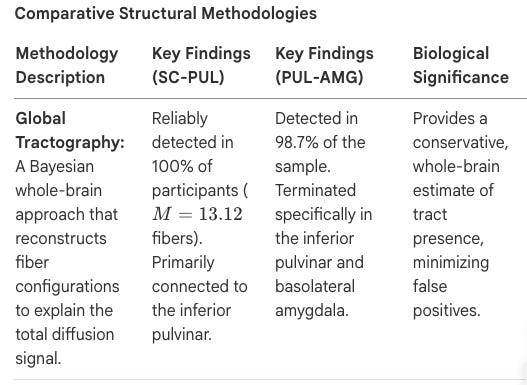
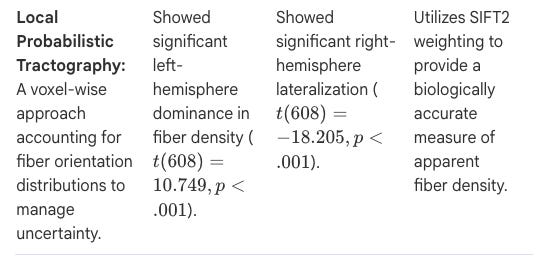
The data identified the Inferior Pulvinar and the Basolateral Amygdala as the primary termination points for these fibers. Crucially, the inferior pulvinar was characterized as a disynaptic hub—the critical lynchpin that receives inputs from the superior colliculus and relays them directly to the amygdala. This structural mapping provided the necessary architectural blueprint to transition from static physical evidence to dynamic functional testing.
3. Phase II: Modeling Functional Dynamics (fMRI and DCM)
With the structural “cabling” confirmed, the researchers utilized Dynamic Causal Modeling (DCM) to transform static BOLD signals into a narrative of information flow. By testing 102 distinct model variations, the researchers performed a rigorous Bayesian Model Selection to determine which causal architecture best explained the neural activity during the “Faces-vs-Shapes” task.
Winning Model: Dual with SC and PUL input
This model, which outperformed 101 alternative architectures (Exceedance Probability = 98.01%), is defined by the following components:
Dual Input Streams: Visual information enters the system via both the Superior Colliculus and the Pulvinar.
Forwards-Only Subcortical Route: A unidirectional stream of information moving from the Superior Colliculus → Pulvinar → Amygdala.
Recurrent Cortical Interactions: Bidirectional coupling between the Inferior Occipital Gyrus (IOG), Fusiform Gyrus (FG), and the Amygdala.
Effective Connectivity Results: The “So What?” Layer
The Face-Specificity “Smoking Gun”: The subcortical pathway was significantly modulated only by faces, not by shapes. If this were a general visual relay, it would respond to all visual stimuli; its specific recruitment for faces proves it is a specialized tool for affective appraisal.
Unidirectional Bottom-Up Flow: The winning architecture confirmed a forward-moving (afferent) signal. This supports the “rapid-detection” hypothesis, where the subcortical route provides a quick, bottom-up alert to the amygdala.
Population Consistency: One-sample t-tests confirmed these modulations were robust across the sample (p<.001), suggesting the subcortical route is a fundamental, conserved feature of the human brain.
This Phase II data transitions the study from observing a physical structure to witnessing its active recruitment during threat-appraisal tasks.
4. Phase III: Behavioral Synthesis and Cross-Modal Correlation
To validate the real-world impact of these neural findings, the researchers correlated the imaging data with the “Penn Emotion Recognition” task. This step was critical for verifying that the biological density of the pathway actually translates into observable differences in human behavior.
The synthesis revealed a highly specific relationship between neural architecture and the ability to detect environmental threats:
Critical Finding: Fear Recognition and Tract Specificity Increased fiber density in the PUL-AMG connection significantly predicted accuracy in recognizing fearful faces (p=0.042). Crucially, this relationship was specific to the local tractography (SIFT2) measures. Furthermore, this correlation was unique to fear; no such relationship was found for sad or angry expressions, establishing the PUL-AMG tract as a specialized circuit for fear appraisal.
Structural-Functional Synthesis The cross-modal correlation revealed that the right pulvinar-to-amygdala pathway serves as the primary driver of this system. As visualized in the Figure 6 residuals, individuals with denser white matter fibers (Structure) exhibited stronger dynamic coupling (Function) during the fMRI task. This reconciles the anatomical existence of the tract with its functional recruitment; the stronger the “cables,” the more efficiently the signal is coupled, leading to superior threat recognition. This convergence of structure, function, and behavior provides the most comprehensive evidence for a dedicated subcortical fear-processing shortcut.
5. Final Implications and Paradigmatic Shift
The McFadyen et al. (2019) study effectively settles the “low road” debate, moving the subcortical pathway from a theoretical non-human curiosity to a proven reality in the human brain. By integrating anatomical precision with causal modeling, the study provides three strategic takeaways for the field:
The Inferior Pulvinar as a Disynaptic Relay: The study clarifies the pulvinar’s role not just as a general relay station, but as a specific connection point that integrates collicular inputs for delivery to the basolateral amygdala.
Right-Hemisphere Lateralization: The consistent right-sided dominance of the PUL-AMG connection aligns with established theories regarding the right hemisphere’s specialization for non-conscious and affective processing.
Clinical Applications & Neuroplasticity: These findings establish a baseline for investigating clinical populations. Weakened subcortical connectivity may characterize Autism, while hyperactive coupling may drive Anxiety. Furthermore, the principle of neuroplastic compensation (referencing Tamietto et al., 2012) suggests this pathway is a vital “failsafe” that can strengthen when cortical visual routes are compromised.
Ultimately, this research proves that the human brain possesses a dedicated neural shortcut for the detection of danger. This pathway is not a vestigial relic but an evolutionary imperative, ensuring that the detection of threat remains prioritized for survival, independent of the slower, more deliberate processes of the conscious mind.
2. Phase I: Structural Reconstruction and Mapping (DWI Analysis)
A fundamental principle of systems neuroscience is that functional flow is constrained by anatomical architecture. Therefore, the first strategic necessity of this research was to establish a “ground truth” through Diffusion-Weighted Imaging (DWI). By physically mapping the white matter fibers before attempting functional modeling, the researchers ensured that their causal models were built upon a viable biological scaffolding rather than statistical artifacts.
FAQ
The Subcortical Pulvinar-Amygdala Pathway and Fear Recognition
In the field of neurobiology, the ability to rapidly detect and respond to threats is a cornerstone of evolutionary survival. For decades, scientists have theorized the existence of a neural “shortcut”—a subcortical visual route—that allows the brain to process threatening stimuli before the conscious mind even registers an image. While this “low road” has been well-documented in rodents, its existence in the human brain remained one of the most persistent controversies in modern neuroscience. Critics often argued that human visual processing is too complex to bypass the cortex, suggesting that subcortical activity was merely an artifact of cortical feedback. However, recent multimodal imaging research has finally resolved these debates, demonstrating that this pathway is a structurally and functionally independent afferent route.
What is the “subcortical route” to the amygdala and why has its existence been debated in humans?
The concept of a subcortical shortcut was pioneered by Joseph LeDoux, whose rodent research showed that auditory danger signals could reach the amygdala even after the auditory cortex was destroyed. In humans, evidence for a similar visual shortcut emerged from “blindsight”—a phenomenon where patients with a damaged primary visual cortex can still react to emotional faces they cannot consciously see.
Despite this, the human subcortical route was heavily criticized. The primary contention was whether the pulvinar—a key node in the thalamus—was actually receiving direct visual input or simply reflecting “leakage” from the slower cortical visual stream. This research settles the controversy by using the massive Human Connectome Project (HCP) dataset to provide converging evidence that the pathway exists as a dedicated “first responder” system, operating independently of cortical interference.
Which specific brain regions comprise this neural pathway?
The subcortical route is composed of three primary nodes that work in a disynaptic leap (a two-synapse sequence) to bypass the traditional visual cortex:
Superior Colliculus (SC): A midbrain structure that acts as the initial receiver of visual signals. It is specialized for detecting motion and basic spatial information, prioritizing speed over detail.
Pulvinar (PUL): A thalamic nucleus that functions as a “strategic filter” or “pre-conscious gatekeeper.” It integrates sensory information and relays it to the emotional centers of the brain.
Amygdala (AMG): The brain’s primary hub for processing emotions, particularly fear. Once triggered, it initiates the body’s autonomic survival responses.
While these regions were known to co-activate, theories of neural shortcuts are essentially academic without a physical map of the wiring. Proving these nodes are physically and functionally “hitched” together required a new level of imaging precision.
Structural Mapping and Methodology
To validate the existence of such a deep and rapid structure, we utilized the Human Connectome Project (HCP) dataset, incorporating high-quality imaging from 622 participants. The strategic value of the HCP lies in its scale, allowing us to use multimodal imaging to find consistent patterns across a massive population—something small-scale studies historically struggled to achieve.
How did the study definitively map these white matter connections?
We utilized two distinct tractography methods for cross-validation: Global Bayesian tractography, which reconstructs whole-brain fiber configurations, and local probabilistic streamline tractography, which accounts for directional uncertainty and noise.
Crucially, we applied SIFT2 (Spherical-Deconvolution Informed Filtering of Tractograms) to estimate Apparent Fiber Density (AFD). In the past, researchers relied on simple “streamline counts,” which are notoriously biased by the length and curvature of a neural path. SIFT2 is revolutionary because it weights streamlines to reflect their biological cross-sectional area. In neuroimaging terms, AFD is a superior proxy for “bandwidth”—it tells us not just that a road exists, but how much traffic it is biologically capable of carrying. Our mapping revealed that up to 60% of this subcortical route overlaps with major fasciculi, primarily the anterior thalamic radiation, highlighting why previous, less-precise studies may have overlooked it.
Where exactly do these fibers terminate within the pulvinar and amygdala?
Precision in termination points is vital for confirming the histological validity of the circuit. The study found the following subregion-specific connections:
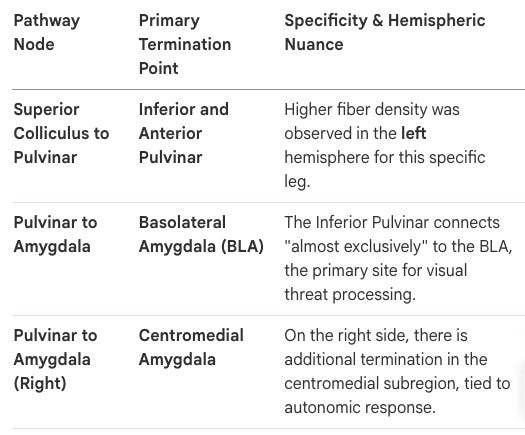
The discovery that the inferior pulvinar acts as the central disynaptic node is significant because it provides a direct link from the midbrain to the emotional centers, bypassing the cortex entirely. While these structural “roads” provide the blueprints, the true test lies in how signal actually traverses these nodes.
Functional Dynamics and Effective Connectivity
Understanding the physical wiring is only half the discovery; we must also observe the “traffic” using Dynamic Causal Modeling (DCM). This allowed us to determine “effective connectivity”—the causal influence one region has over another—to see if the brain actually uses this shortcut during threat detection.
Does information flow toward or away from the amygdala in this pathway?
After testing 102 different computational models, the “Dual with SC and PUL input” model emerged as the definitive winner. This model proves that the subcortical route is forward-only (afferent) during face processing. Information originates in the SC and PUL and flows toward the amygdala to trigger a response. Notably, we found no evidence of significant backwards feedback from the amygdala to these subcortical nodes during the task, reinforcing the pathway’s role as a rapid, one-way signaling system.
How does this subcortical route interact with the known cortical visual stream?
The research supports a “Dual” architecture where the subcortical route operates in parallel with the cortical stream. However, there is a fundamental difference in how they “talk”:
The Cortical Stream: Information travels through the Inferior Occipital Gyrus (IOG) and Fusiform Gyrus (FG). The winning model showed that these cortical nodes have reciprocal (back-and-forth) connections, allowing for refined, conscious processing.
The Subcortical Route: This remains strictly forward-only. It is a “first responder” that does not wait for cortical deliberation.
Furthermore, while other theories have linked the pulvinar to the motion-processing area V5/MT, our study excluded V5/MT from the winning model for face processing. This demonstrates the extreme specificity of the fear-detection circuit.
The Impact on Fear Recognition and Behavior
The “So What?” of neural connectivity lies in how microscopic white matter translates into human behavior. Fiber density is not just a biological metric; it is a predictor of how a person interprets their social world.
Is there a direct link between pathway strength and emotional intelligence?
Yes. Using the Penn Emotion Recognition task, we found a significant correlation between fiber density in the pulvinar-amygdala pathway and a participant’s accuracy in identifying emotions. Critically, this relationship is specific to fear recognition. The strength of this pathway did not predict a person’s ability to recognize anger or sadness. This confirms that the subcortical route is a specialized survival system, fine-tuned over millennia to detect the specific facial cues of fear.
What is the significance of hemispheric lateralization in these findings?
We observed a complex but distinct right-hemisphere specialization. While the SC-PUL leg showed greater physical density on the left, the functional and behavioral impact is heavily right-lateralized. The right pulvinar-amygdala connection showed:
Stronger correlation with behavioral accuracy in fear recognition.
Stronger functional coupling (effective connectivity) in the DCM.
Direct correlation between fiber density and real-time modulatory activity.
This provides the structural “proof” for long-standing functional theories (such as Gainotti, 2012) that the right hemisphere is specialized for processing non-conscious survival stimuli. This pathway is the physical substrate for that “gut feeling” of danger that precedes conscious thought.
Clinical Implications and Future Research
This research provides a vital baseline for understanding neurodivergent populations. By mapping the healthy “fail-safe” system, we can begin to see how clinical conditions arise when this system is over- or under-active.
How might these findings explain conditions like Autism or Anxiety?
The subcortical route acts as a redundant system—a survival fail-safe that compensates when other pathways are compromised (as seen in blindsight).
Autism: Weakened connectivity along this route may explain the reduced response to fearful faces and social cues often observed in individuals with autism.
Anxiety: Conversely, hyperactive activity along this pathway can lead to a state of constant high alert, where the “first responder” system becomes hypersensitive to environmental threats, triggering the amygdala even when no real danger is present.
What are the limitations of this study and the next steps for neuroscientists?
Capturing signal from deep brain structures remains a technical challenge. The Superior Colliculus is small and sits near major blood vessels in the brainstem, leading to a lower BOLD signal-to-noise ratio compared to the cortex. Additionally, reconstructing fibers that traverse the grey matter of the pulvinar requires high-resolution anatomically-constrained tractography to avoid false negatives.
Final Verdict: This study settles the debate by providing the first converging evidence from structure, function, and behavior. We have shown that the subcortical fear route is not a myth or a cortical byproduct, but a physical, afferent pathway that allows the human brain to detect threat with life-saving speed. From the density of its fibers to the causal flow of its signal, this pathway is the silent sentinel of human survival.
Table of Contents with Timestamps
00:00 — Cold Open: The Third Century Crisis Rome under simultaneous invasion, economic collapse, and civil war sets the stage for Diocletian’s fateful “fix.”
00:53 — Diocletian’s Paradox The emperor doubles the military and bureaucracy to save Rome — and inadvertently guarantees its long-term collapse.
02:01 — The Modern Mirror Smartphones, banking software, and corporate middle management as today’s version of the ever-taller skyscraper.
03:09 — The Episode’s Mission Framing the central question: when does a society’s complexity stop being its strength and become its anchor?
03:48 — Meet the Source Stack Introducing Tainter’s foundational text, the MDPI network model, digital complexity research, and a detour into neuroscience.
04:34 — Why Start With the Brain? Setting up the biological baseline: nature has been problem-solving far longer than civilization has existed.
05:08 — The eLife Threat-Detection Study McFadyen and colleagues’ Human Connectome Project research on the brain’s fear-processing shortcut.
06:33 — Two Pathways: Cortex vs. Shortcut Comparing the slow, high-resolution visual cortex route to the fast subcortical pulvinar–amygdala bypass.
09:50 — Complexity Is a Luxury of Safety The episode’s first thesis statement: under real threat, simplification wins.
10:34 — Introducing Joseph Tainter How The Collapse of Complex Societies (1988) overturned the “external shock” theory of civilizational collapse.
12:08 — Defining Complexity Differentiation and integration, from hunter-gatherer bands to irrigation-based agrarian states.
13:42 — The Ladder Metaphor Boris Smussmus’s image of civilization as a ladder whose lower rungs rot away as you climb.
15:01 — Energy Subsidies and Thermodynamics Why complexity requires a continuous surplus of energy — from calories to coal to capital.
16:42 — The Math of Diminishing Marginal Returns Low-hanging fruit, the cost-benefit curve, and why every civilization eventually runs out of easy wins.
18:51 — Diocletian’s Ladder Diminishing returns Revisited Rome’s shift from conquest-funded expansion to self-cannibalizing taxation and the birth of feudalism.
21:14 — The Messy Room Analogy A domestic-scale metaphor for diminishing returns: the first 20 minutes of cleaning versus the last four hours.
23:51 — Why Can’t Societies Just Simplify? Transition into the psychological and structural barriers to voluntary de-complexification.
24:08 — The MDPI Ratchet-Effect Model A mathematical simulation of laborers and administrators reveals why bureaucracy almost never shrinks.
26:44 — Parkinson’s Law C. Northcote Parkinson’s insight that bureaucrats are incentivized to multiply subordinates, not eliminate them.
28:38 — The Political Trap Why leaders who propose radical simplification lose legitimacy — and sometimes worse.
30:36 — Innovation’s Diminishing Returns Tainter, Strumsky, and Lobo’s patent-productivity research: 5 million U.S. patents, 1974–2005.
32:26 — The Burden of Knowledge Why reaching the frontier of any modern field now requires decades of specialized education.
33:01 — Eroom’s Law Moore’s Law in reverse: the exploding cost of pharmaceutical development despite better tools.
34:37 — The Software Counter-Argument An Astral Codex Ten-style challenge: didn’t the digital revolution break the diminishing-returns pattern?
36:52 — The Hidden Infrastructure Cost Why data centers, rare-earth mining, and chip fabrication mean software isn’t actually exempt.
37:21 — The Silicon Age Collapse Applying Tainter’s framework directly to enterprise software and legacy code.
38:37 — Technical Debt The leaky-pipe metaphor for how patched-over systems accumulate invisible, compounding risk.
41:32 — Naming the Global Complexity Overhang Summarizing the pattern across law, healthcare, science, and software infrastructure.
42:20 — Three Strategies for a Soft Landing Introducing the episode’s turn toward solutions rather than inevitable doom.
42:24 — Strategy One: A New Energy Subsidy Fusion, solar, or another thermodynamic breakthrough that could fund continued complexity.
43:34 — Strategy Two: Algorithmic Management of Complexity Using automation and digital commons to lower the cost of bureaucracy itself.
44:55 — Strategy Three: Resilience Through Simplification Reframing “collapse” as a healthy shedding of unsustainable costs rather than an apocalypse.
45:48 — The Byzantine Empire Case Study How the Eastern Roman Empire voluntarily simplified — and survived a thousand years longer than Rome.
47:54 — Bringing It Back to the Brain Closing the loop: the fear pathway as a model for intentional, healthy simplification.
48:45 — The Central Question Will we keep building the labyrinth, or learn to edit ourselves down to what matters?
49:17 — Closing Thoughts and Call to Action An invitation to look for “technical debt” in your own life, work, and routines.
49:43 — Outro and Credits
Index with Timestamps
administrators: 24:54, 44:31
amygdala: 08:02
Astral Codex Ten: 34:37
Boris Smussmus (ladder analogy): 13:45
burden of knowledge: 32:26
Byzantine Empire: 45:48
collapse (Tainter’s definition): 23:47
complexity, definition of: 12:08
diminishing marginal returns: 16:42
Diocletian: 00:53
diminishing returns, math of: 16:42
energy subsidies: 15:01
Eroom’s Law: 33:01
feudalism, origins of: 20:38
fusion energy: 43:09
Human Connectome Project: 05:18
hyperinflation: 20:22
irrigation systems: 13:01
Large Hadron Collider: 32:08
legacy software (COBOL): 37:41
low-hanging fruit: 16:59
Maya civilization: 10:59
MDPI network model: 03:58
Parkinson’s Law: 26:53
patents, productivity of: 30:47
pulvinar-amygdala pathway: 07:52
ratchet effect: 25:38
Roman Empire, collapse of: 00:26
subcortical route: 06:21
Tainter, Joseph: 03:53
technical debt: 38:56
thematic system (Byzantine): 46:41
thermodynamics: 03:37
tractography: 05:43
Poll
Post-Episode Fact Check
Diocletian and Rome’s 3rd-century crisis: Accurate. The historical Crisis of the Third Century involved simultaneous border invasions, economic collapse, and rapid imperial turnover; Diocletian’s reforms (expanded military, subdivided provinces, larger bureaucracy) are well documented and are the standard example used in Tainter’s own work.
Joseph Tainter, The Collapse of Complex Societies (1988): Accurate. This is Tainter’s actual, foundational, widely cited book, and its central thesis — that societies collapse due to diminishing marginal returns on complexity rather than solely external shocks — is represented accurately in the episode.
eLife study (McFadyen, Mattingley & Garrido, 2019): Verified via direct search. The study used probabilistic tractography on 622 Human Connectome Project participants and found a functionally afferent pulvinar–amygdala pathway; individuals with denser fiber tracts along this route showed better fearful-face recognition. The episode’s description of the study’s methods and findings is accurate.
Patent productivity study (Strumsky, Lobo & Tainter): Verified. Independent reporting confirms the average research team size grew roughly 48% between 1974 and 2005, while patents per inventor fell 22% over the same period — matching the episode’s figure exactly.
Eroom’s Law: Accurate as a named, real phenomenon in pharmaceutical economics — the roughly nine-year doubling in the cost of developing a new drug despite technological advances is well established in health economics literature, though exact multiples vary by source and time period studied.
The specific “60% decline in healthcare productivity over 52 years” figure: This specific statistic could not be independently verified in this fact-check and should be treated as unconfirmed pending a source citation from the production team; the broader trend it illustrates (declining marginal returns in healthcare spending relative to life-expectancy gains) is consistent with published health economics research.
Byzantine Empire’s thematic system and survival: Broadly accurate. The Eastern Roman Empire did adopt localized, land-based militia defense (the thematic system) in the 7th century as a lower-cost alternative to centralized professional armies, and it did outlast the Western Empire by roughly a thousand years, though historians attribute this longevity to multiple interacting factors, not simplification alone.
MDPI “laborers and administrators” network model and the “ratchet effect”: The general framing is consistent with published complexity-science literature modeling Tainter’s theory mathematically, though the episode does not name the specific paper or authors, making independent verification of exact terminology difficult.
Parkinson’s Law: Accurate. C. Northcote Parkinson articulated this in 1955, including the specific observation that officials multiply subordinates rather than rivals.
This is a research-based science and history podcast; listeners with a personal interest in any topic discussed are encouraged to consult primary sources linked in show notes.
Image (3000 x 3000 pixels)

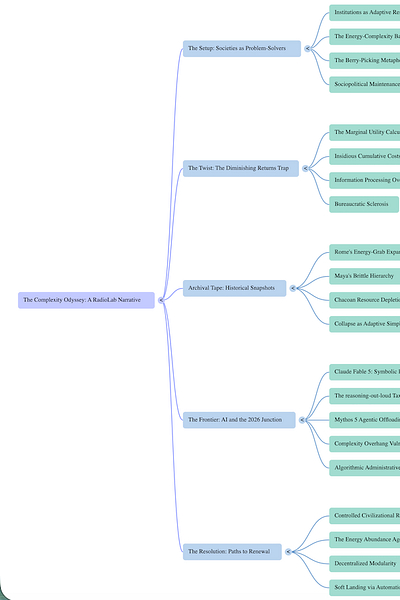
Mind Map
Comic

Street Art

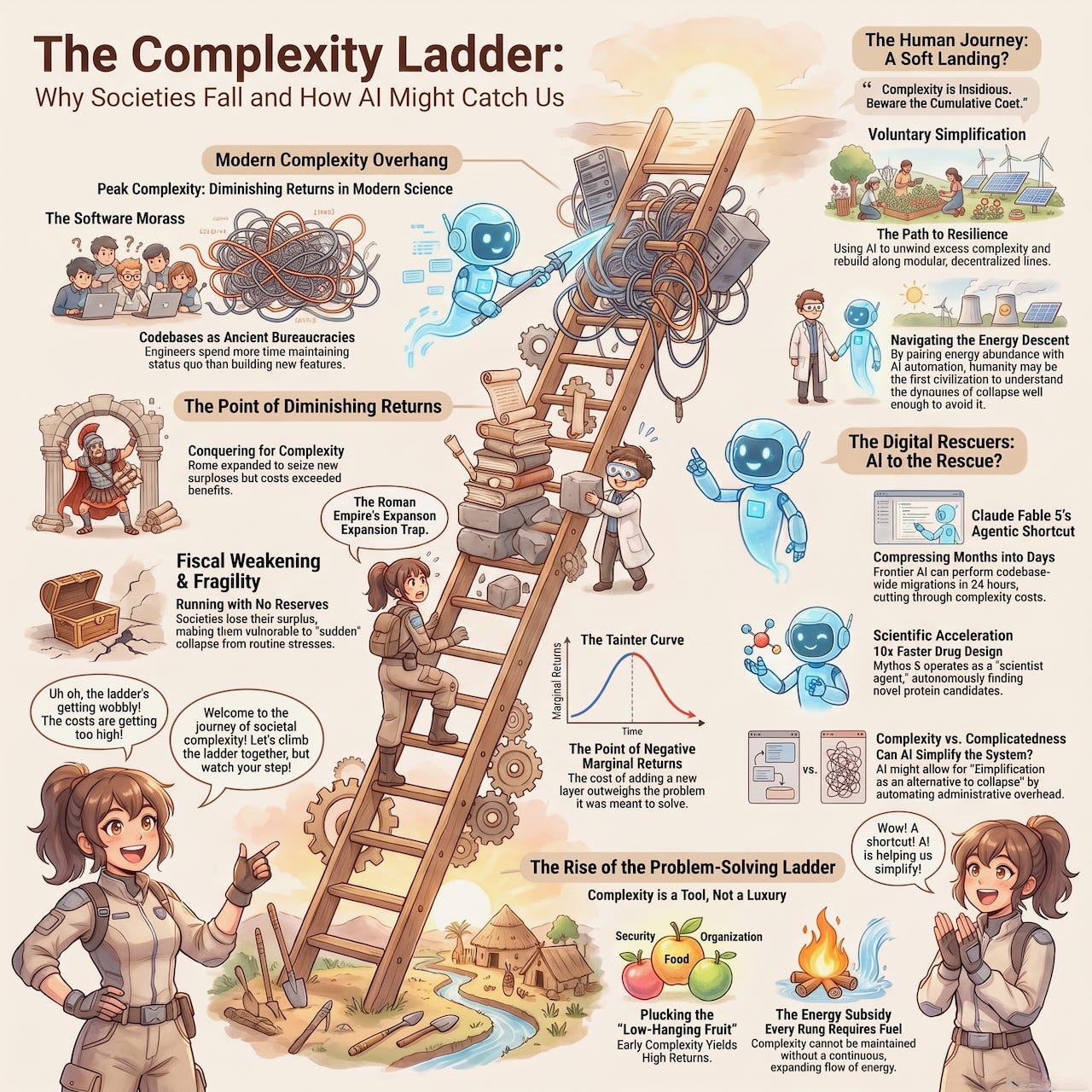
Infographics
Trailer
https://youtube.com/shorts/v2lQSSQoSB0?feature=share